wellness 5 min read
My Journey with Rosacea
I’ve struggled with my skin for the past 10–15 years. For a long time, it was treated as acne. Doctors and dermatologists prescribed different acne t...
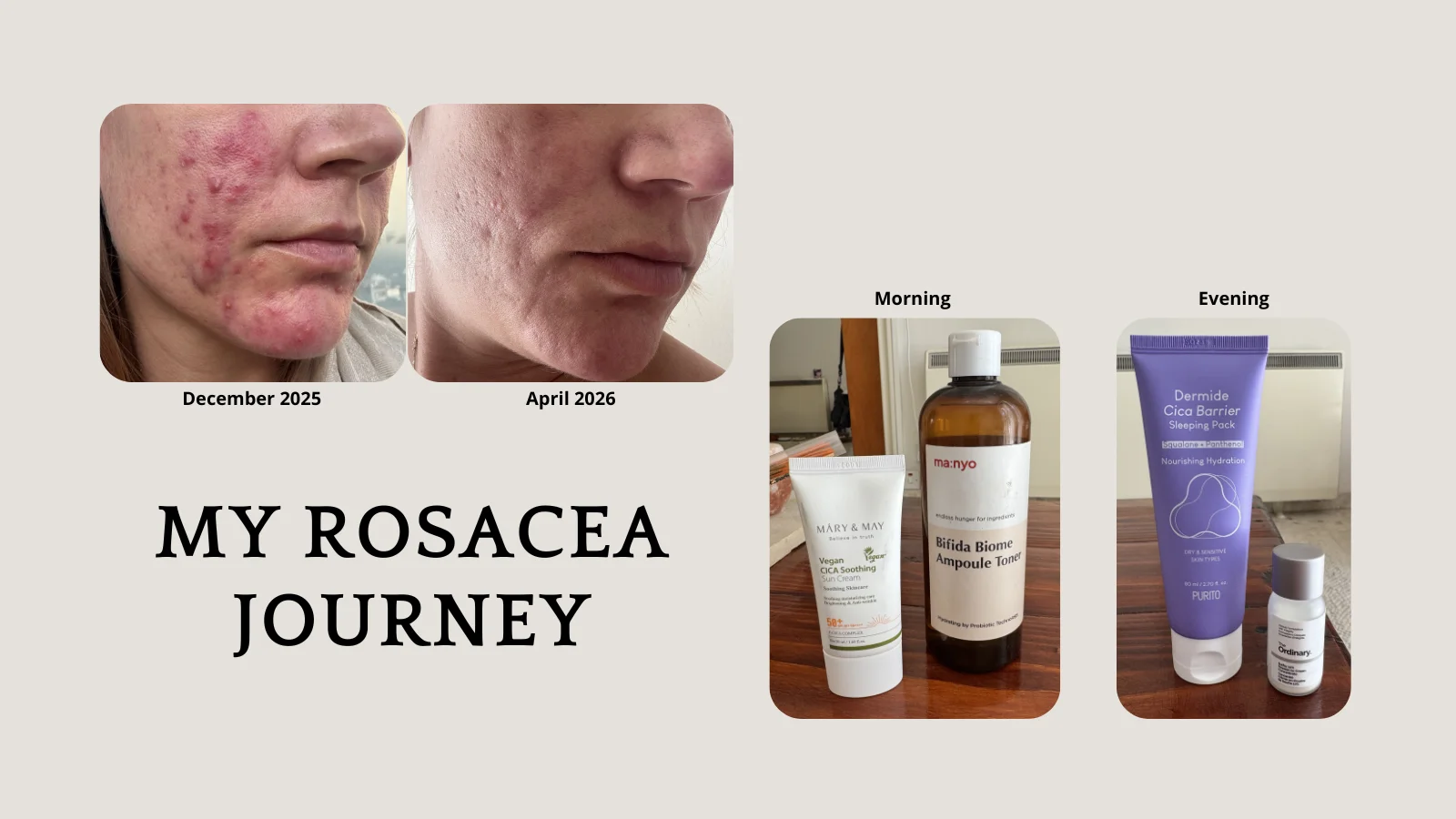
I’ve struggled with my skin for the past 10–15 years.
For a long time, it was treated as acne. Doctors and dermatologists prescribed different acne treatments, but instead of improving, my skin only became more irritated over time. Looking back, it makes sense — because it wasn’t acne.
It was rosacea.
It wasn’t until 2–3 years ago, through conversations with friends, that I started to understand what might actually be going on. I later received a rosacea diagnosis from a dermatologist, and over time I’ve come to believe that it is type 2 — which often includes redness, inflammation, and acne-like breakouts.
One theory (supported by some research) is that type 2 rosacea can be linked to an overgrowth of demodex mites on the skin. That would explain why ivermectin (Soolantra) was the only treatment that gave me noticeable results when I tried different options, including topical treatments and antibiotics.
I also tried laser treatments — one of the more advanced and recommended types — and traveled two hours each way here in Cyprus to access it. I went roughly every three weeks, for up to 10 sessions.
While my skin looked better for a month or two after each treatment, it never addressed the root cause. The results didn’t last, and the model relied on ongoing maintenance treatments every few months, which didn’t feel sustainable for me — financially or time-wise. Eventually, my skin would flare up again, even worse than before.
After that, I tried to take a more holistic approach.
I experimented with a diet similar to paleo, hoping to reduce inflammation from within. Unfortunately, I didn’t get very far before becoming pregnant. The first months were intense, and I could mostly only tolerate very simple foods like semolina porridge and potatoes, so that plan had to pause.
During this time, I returned to a skincare routine focused on repairing my skin barrier.
With the help of research — and actually also ChatGPT — I built a routine aimed at calming and strengthening my skin rather than aggressively treating it. I started using a toner designed to support the skin microbiome, a gentle sunscreen for sensitive skin, and a deeply hydrating sleeping mask to help restore moisture overnight.
Previously, I had also used ivermectin, but I had to stop during pregnancy.
My skin was still very reactive — red, inflamed, and what I often describe as “angry.” Pregnancy itself may also have contributed, both hormonally and through the limited diet during that time.
I then introduced red light therapy using my LED mask, which can help reduce inflammation and support skin healing.
But it wasn’t until December, while we were in Melbourne, that something shifted.
I started thinking again about demodex — and the possibility that my earlier use of ivermectin hadn’t been long enough to fully reduce their presence. Since type 2 rosacea often includes those acne-like bumps, it made sense to me that something was still triggering that response.
So I decided to try adding sulfur to my routine.
Sulfur is known to have antimicrobial and anti-inflammatory properties, and can be helpful for conditions like acne and rosacea. I started using a 10% sulfur treatment on the areas that felt most inflamed.
Within a few weeks, I noticed a significant difference.
The redness reduced, the inflammation calmed, and no new breakouts. The improvement felt comparable to what I had experienced with laser — but this time, it continued to get better.
Since then, I’ve kept the same routine. I use the sulfur treatment in the evening, followed by my hydrating night mask, and continue with red light therapy several times a week (approved by my doctor during pregnancy).
And my skin has continued to move in the right direction.
For the first time, it feels like something is actually working long-term.
One thing I’ve reflected on a lot during this journey is how difficult it has been to find the right help. The next step suggested to me at one point was a very strong acne medication (isotretinoin), which is not compatible with pregnancy and comes with significant side effects — something I personally wanted to avoid.
So much of what is helping me today has come from my own research, trial and error, and a deeper understanding of my own body.
And that part, I’m actually really proud of.
Another important layer to this, for me, has been the emotional side.
Over the past few years, I’ve done a lot of inner work and trauma healing. Thinkers like Gabor Maté speak about how unresolved stress and trauma can manifest in the body as chronic inflammation.
I don’t think my skin issues are only physical.
I believe there is a connection between stress, the nervous system, and inflammation in the body — and that my rosacea may be one expression of that. It simply showed up in my skin, which may have been my most sensitive point.
I know that rosacea is often described as something that cannot be fully cured.
But I still believe that healing is possible in a broader sense.
Maybe not as a quick fix — but through supporting the skin barrier, reducing inflammation, and addressing both internal and external factors over time.
This is what has worked for me so far.
And this is the difference you see in the photos.
Written by
Caro is the other half of Wander and Nest. She writes about skincare, wellness, and the slow work of building routines that stick — from her own rosacea journey to the products she keeps coming back to.